
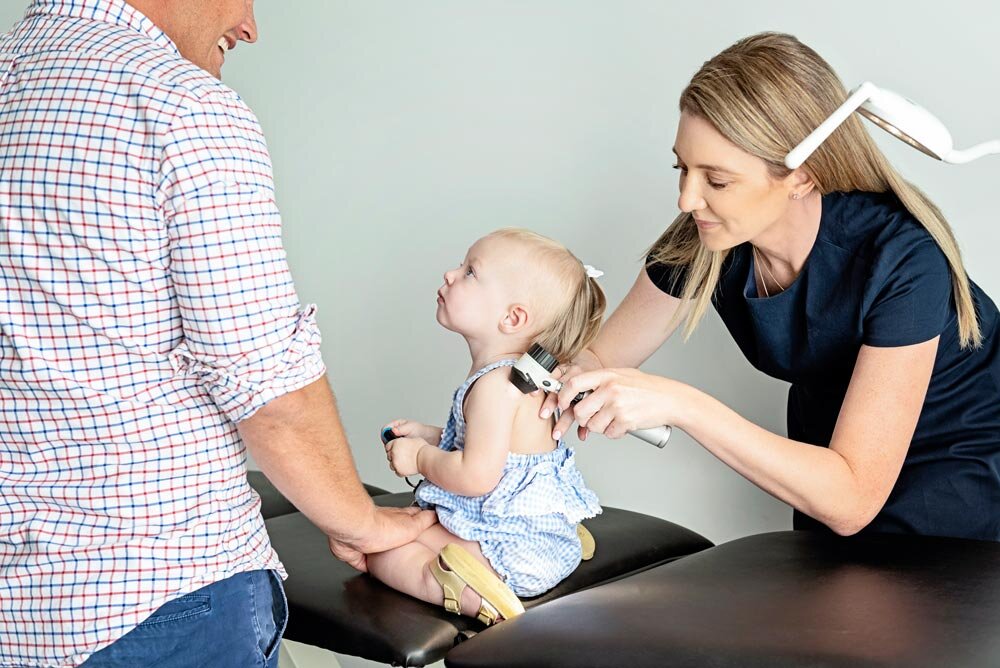
Full Skin Check
The skin is the largest organ in the body, and you only get one, so it’s important you take care of it. Australia has the highest rate of skin cancer and melanoma in the world. A full skin check is essential for early detection and treatment of skin cancers. There are many types of skin lesions, many are benign (non-harmful), but a specialist dermatologist can advise if any require removal, or if you may have an increased risk of developing skin cancer in the future. If you have skin, you have a risk of skin cancer, however some patients are higher risk than others.
High risk patients may have the following:
Fair and freckles
Fair or red hair
Lots of sun exposure or use of tanning beds
Family history of skin cancer
Conditions that suppress the immune system
Large number of naevi (moles).
Your questions answered below, click to expand and learn more.
-
The doctor will ask you to unchange down to your underwear, so that all of your skin surfaces can be examined. This includes your feet, in between your toes and your scalp. Feel free to point on any lesions that have concerned you or changed.
-
Loose clothes that are easy to remove as 'full skin check' really means full skin!
-
Please don't wear any makeup or moisturiser. Not even tinted suncream or lip balm. This means we can properly assess your skin. Under the dermatoscope (magnifier) even the tiniest bit of makeup can change to the appearance of a suspicious lesion. Please do not use fake tan in the 10 days prior to your appointment.
-
A biopsy is a sample of a lesion. It is used to assist in diagnosis. Your doctor may recommend this during your skin check. A biopsy is performed using local anaesthetic – this is a small needle with a numbing agent injected prior to taking the sample of skin. The specimen is then sent to a laboratory to be examined under a microscopy.
-
An up-to-date list of any medications that you take, a list of any allergies and any history which is relevant to your skin or other medical conditions.
Tips for looking after your skin:
Always wear suncream on your face, neck and other exposed sites.
Ultraviolet sun light is present in the atmosphere all year round, so don't stop being sun safe just because it's cold outside.
Do regular self checks of your own skin, have a friend or family member check your back.
Moles or spots on your skin that have changed size, colour or shape are the ones to watch.
See your doctor if you feel that your moles have changed.
Do you need a full skin check?

Skin Cancer Treatment
Skin cancer treatment involves a number of steps. Identification of suspicious lesions, correct diagnosis and then discussion of appropriate treatments. In some situations correct diagnosis involves taking a biopsy/sample of the lesion, but in others clinical examination is enough to correctly identify a skin cancer.
Treatment options may then be any of the following:
Cryotherapy with liquid nitrogen
Treatment with a topical cream
Curettage
Surgical excision
Referral to radiation therapy or plastic surgeon for more complicated procedures.